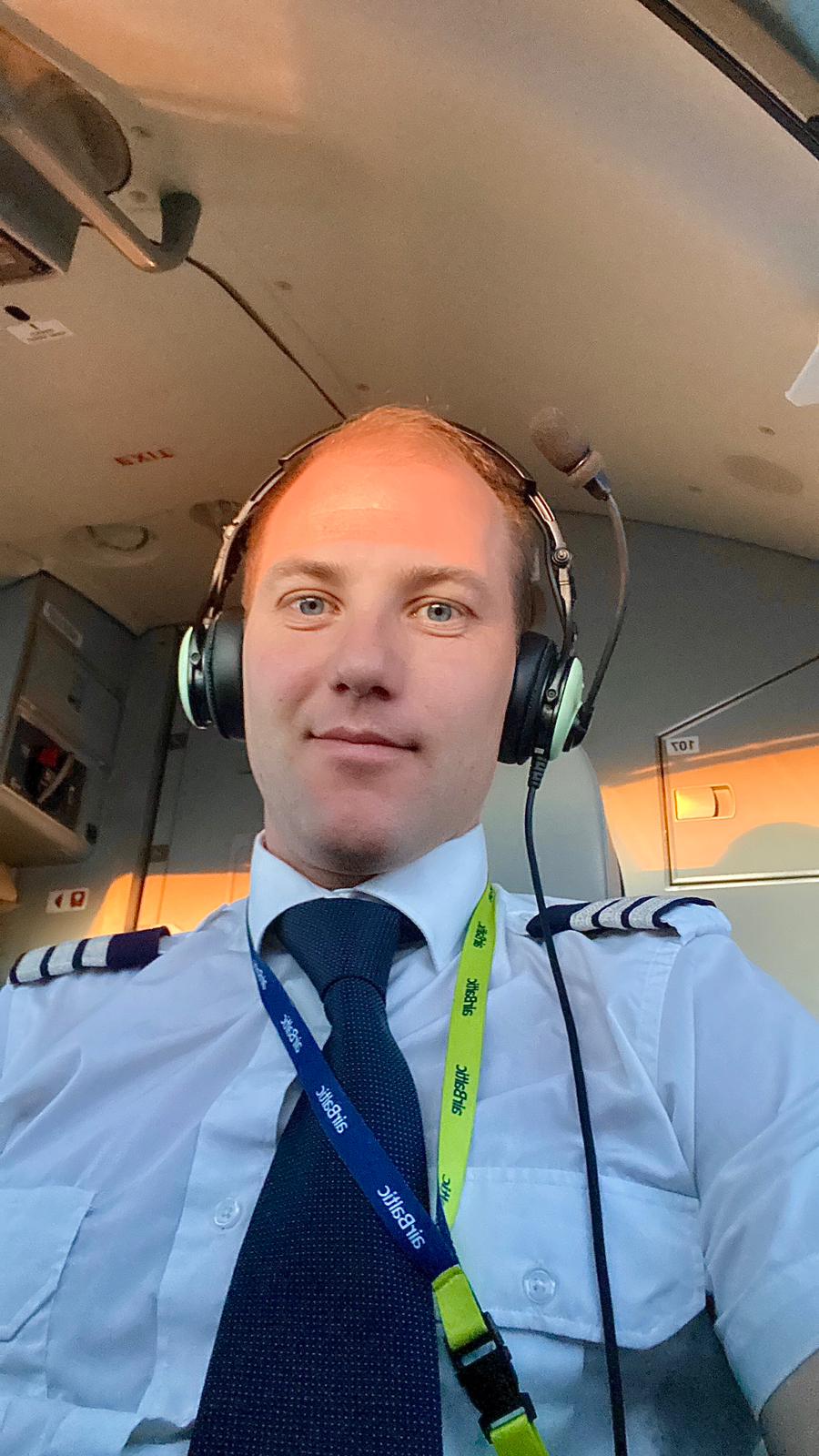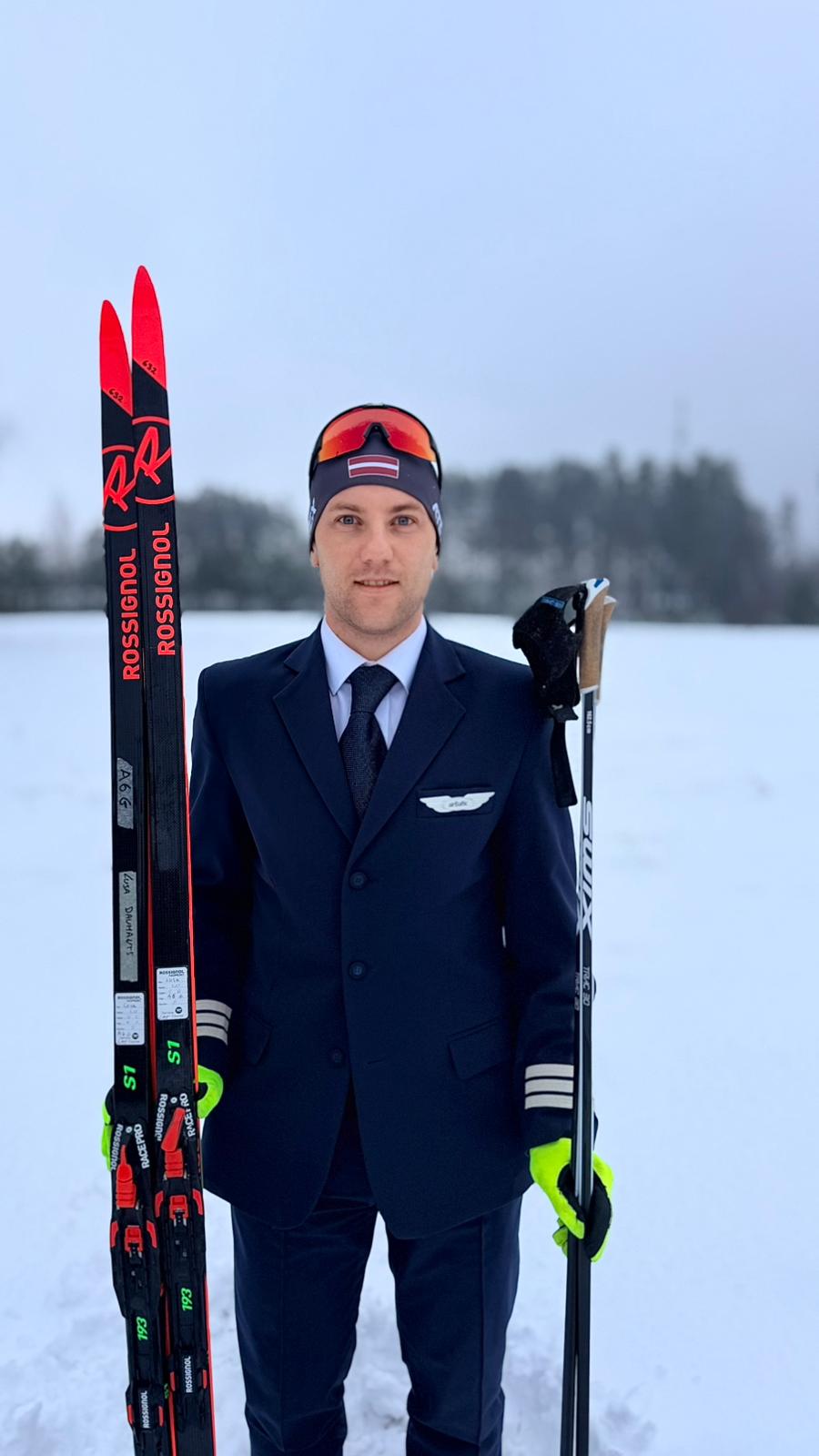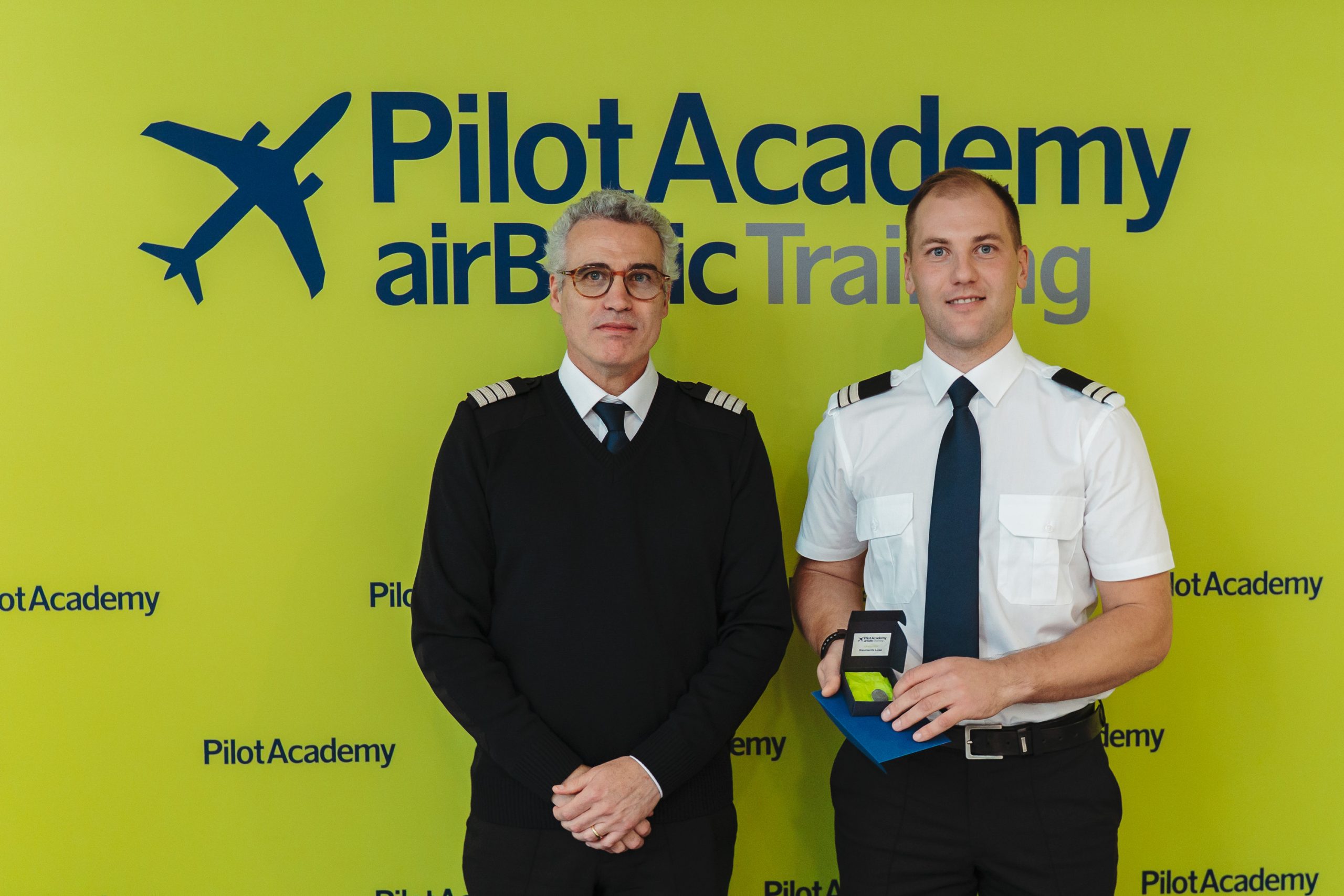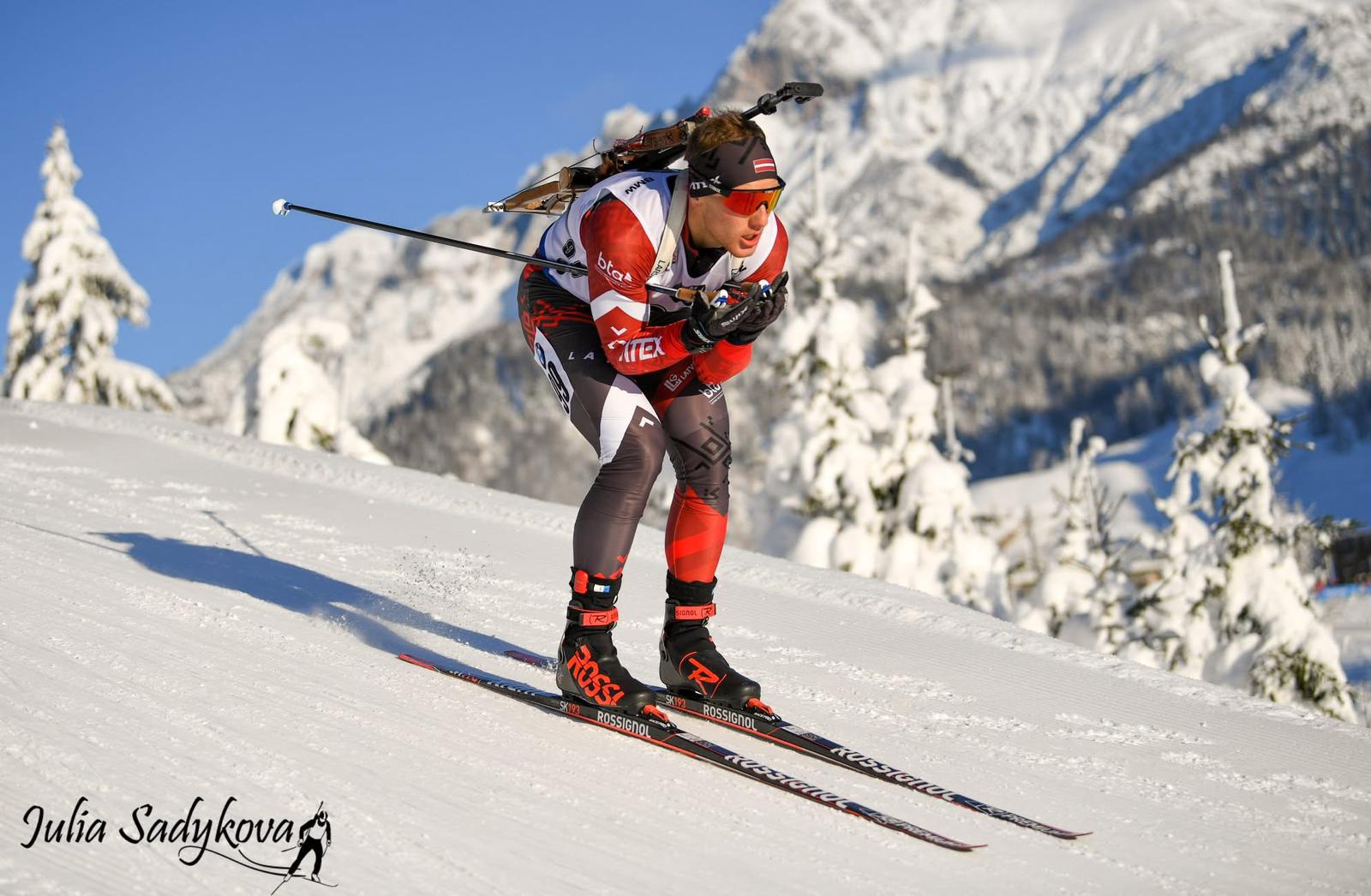
For many pilots, the dream of flying begins at an airport fence or during a childhood holiday flight. For Daumants Lūsa, the path to aviation began on snow-covered biathlon tracks, shaped by years of elite sport, discipline, and international competition. Today, having graduated from airBaltic Pilot Academy and joined airBaltic as a pilot, he brings a high-performance athlete’s mindset to the flight deck.
“Both sport and aviation have interested me since I was a kid,” Daumants says, “and interestingly, one has kind of paved the way for the other.”
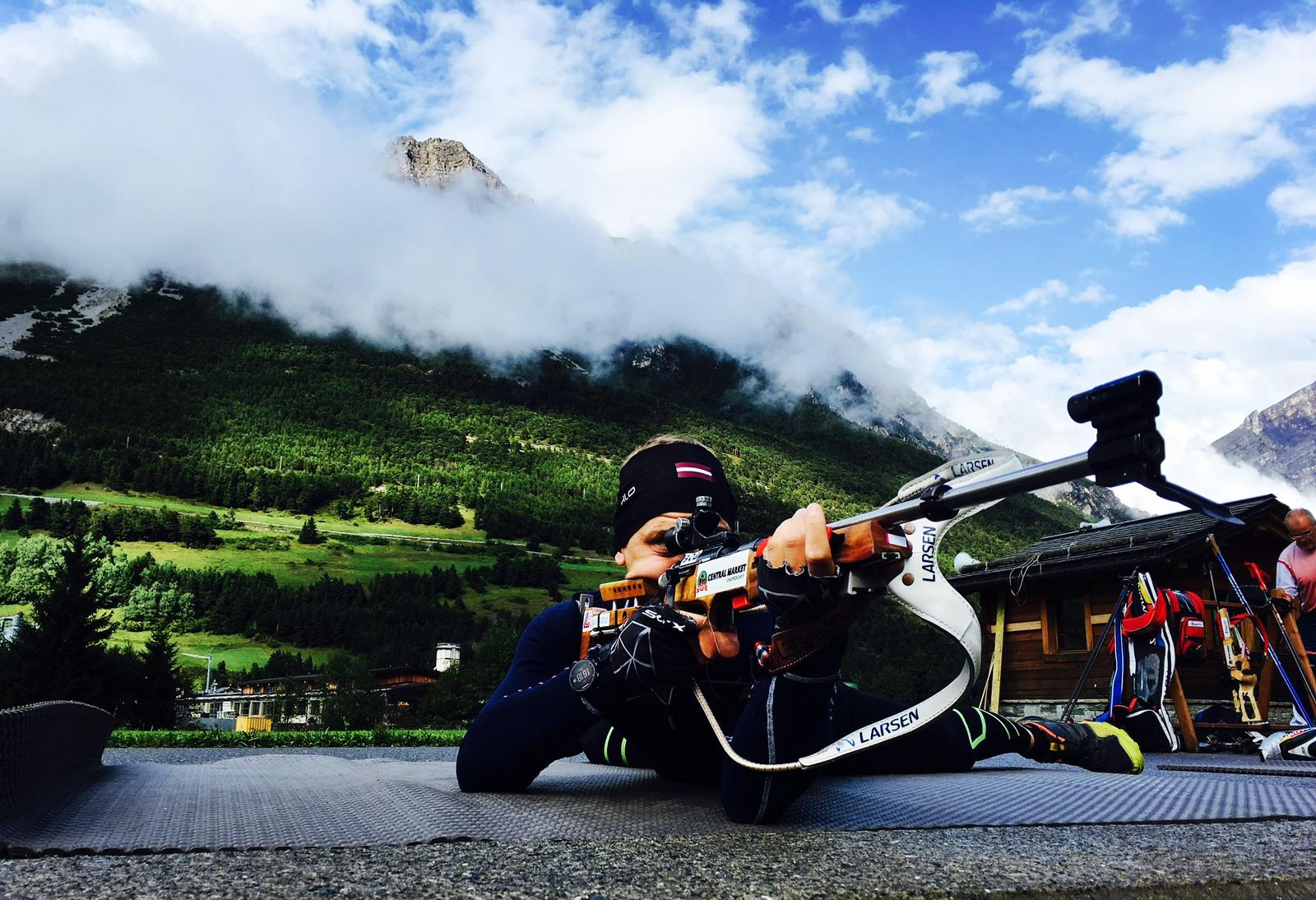
For many years, he was a member of the Latvian National Biathlon Team, competing at the highest international level. His career included World Cup events and World Championships, with his best result being a 12th place finish in the World Cup single mixed relay. Biathlon, one of the most demanding winter sports, combines extreme physical endurance with the mental precision required for shooting accuracy—an unusual but powerful combination of intensity and control.
An unexpected connection to aviation developed during those competitive years. Constant travel to training camps and competitions meant spending significant time in airports and on aircraft.
“Traveling so often to competitions and training camps meant spending a lot of time in airports as a passenger,” he explains. “I really enjoyed the airport atmosphere, and many times I found myself thinking about how fascinating it would be to one day fly the aircraft myself.”
What started as curiosity gradually became a serious ambition.
Discipline That Transfers
Transitioning from professional sport to aviation may seem like a dramatic change, but for Daumants, the parallels are clear.
“In my opinion, many of the qualities and demands placed on modern aviation pilots are very similar to those of professional athletes,” he says. “I consider myself fortunate to have this biathlon background.”
Biathlon required years of unwavering discipline. Daily intensive training sessions, physical preparation, mental conditioning, and strict routines were part of life for over a decade.
“For many years, I had to show up daily and give my best during intensive training,” he recalls.
That same discipline became essential during his time at airBaltic Pilot Academy. Pilot training, with its fast pace, technical depth, and constant evaluations, is demanding in its own way.
“I later applied these acquired skills of discipline and commitment during my pilot training, which was also an extremely demanding period.”
Beyond discipline, reflection is another habit he carried over from sport. In elite competition, reviewing performance is crucial—analyzing what worked, what didn’t, and how to improve.
“I also carried over the habit of reflection – just as I used to review my training sessions and races, I now take time after flights to think about what went well and where there is room to improve.”
This mindset of continuous improvement aligns closely with aviation culture, where learning never stops.
Adapting Under Pressure
Perhaps the strongest connection between biathlon and aviation lies in adaptability.
“Biathlon is a sport that requires rapid adaptation – from intense physical exertion while skiing to a calm, precise, and controlled state at the shooting range,” Daumants explains.
Within seconds, an athlete must shift from maximum heart rate and muscular strain to steady breathing and pinpoint accuracy. That ability to regulate focus and remain composed under pressure is equally vital in the cockpit.
“I believe this ability to adapt quickly is also essential for safe flying.”
Modern aviation demands situational awareness, clear decision-making, and the capacity to respond calmly to changing circumstances. Whether adjusting to weather conditions, operational changes, or unexpected scenarios, the pilot’s mindset must remain stable and analytical.
For Daumants, years of racing at the highest level built exactly that resilience.
A New Arena, Same Standards
Graduating from airBaltic Pilot Academy marked the beginning of a new professional chapter. Trading skis for a sidestick controller, and snow tracks for runways, Daumants now applies the same high standards to his aviation career that once defined his athletic life.
While the arenas have changed—from world championship venues to European airports—the core principles remain familiar: preparation, teamwork, discipline, and responsibility.
His journey also highlights the diversity of backgrounds within airBaltic’s pilot community. The Academy welcomes individuals with varied professional experiences, proving that excellence in one field can serve as a powerful foundation for another.
For Daumants Lūsa, the transition from elite athlete to airline pilot is not a departure from his past—it is a continuation of the same pursuit of performance, precision, and growth.
From World Cup competitions to the Airbus A220 flight deck, his story demonstrates that the mindset required to compete at the highest level in sport can also elevate performance in the skies.